June 22, 2026 • Adaeze Okonkwo • 9 min reading time • Prices verified June 18, 2026
Plus-Size Bikini Sets for a 14-Inch Bust-to-Hip Differential: Sizing Both Pieces Right
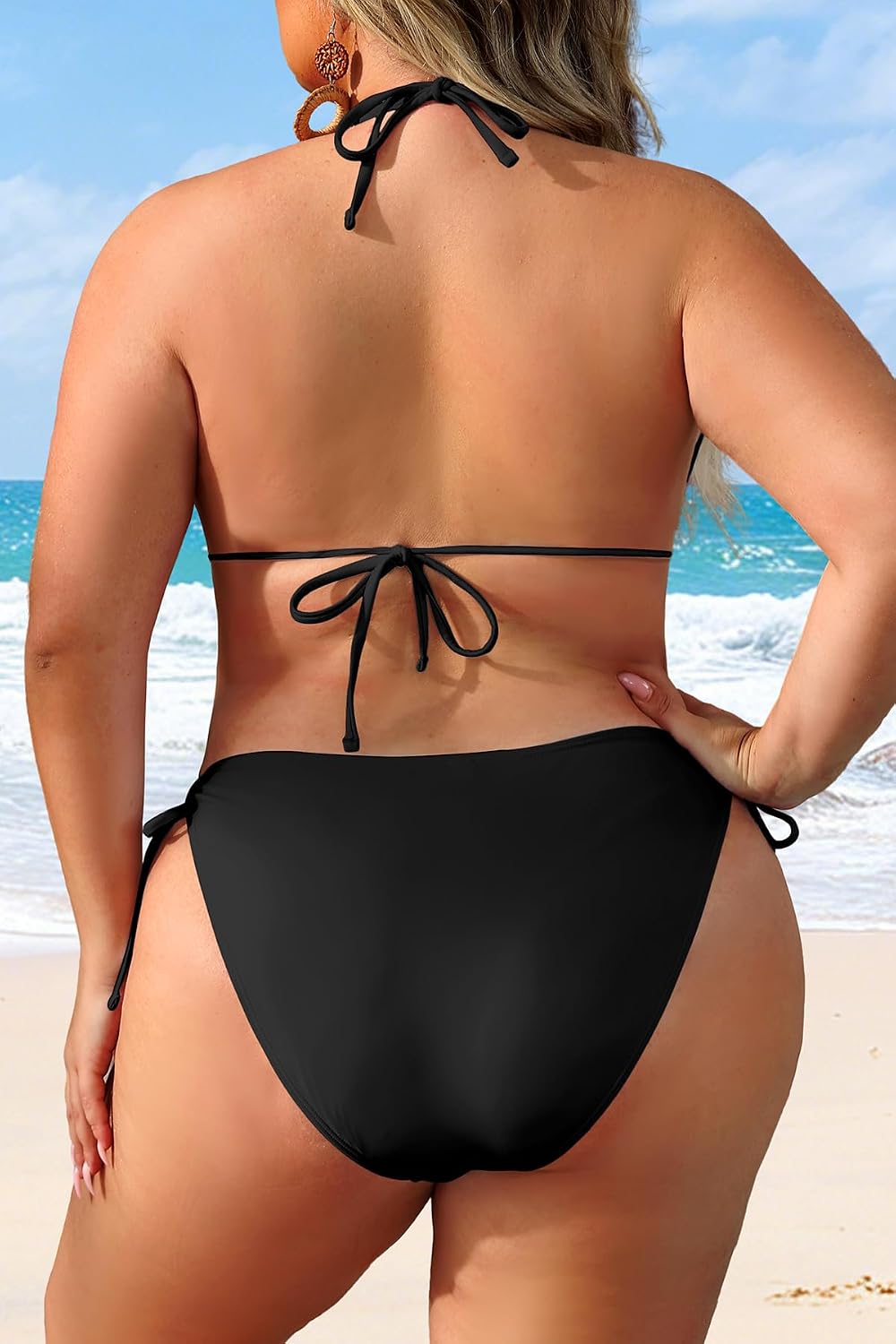
Here’s a situation most of us with curves know well: you find a bikini top that fits your bust perfectly — supportive, no gaping, no spillover — and then you try the matching bottom and it either cuts into your hips or sags at the back. Or the reverse: the bottoms are ideal but the top swims on you. The problem isn’t your body. The problem is that most bikini sets are designed as if your bust and hips naturally land within the same one or two sizes of each other. For a lot of full-figure shoppers, they simply don’t. A 14-inch bust-to-hip differential — meaning your hip measurement is 14 or more inches larger than your underbust or full-bust measurement — is not unusual, and it’s the exact scenario where buying a set off the rack without a strategy tends to fail. This guide is specifically organized around that differential. We’ll walk you through how to size each piece independently, which retailers actually support mix-and-match purchasing, and which construction details to prioritize so both pieces do their jobs at the same time.
| EDITOR'S PICK[Yonique Women Plus Size High Wa…](https://www.amazon.com/dp/B0FDG3464L?tag=greenflower20-20) | Mid-tier[Hanna Nikole Women Plus Size Tw…](https://www.amazon.com/dp/B0BR3YK56V?tag=greenflower20-20) | Budget pick[Daci Women Plus Size Triangle B…](https://www.amazon.com/dp/B0DWT5GZNS?tag=greenflower20-20) | |
|---|---|---|---|
| Bottom style | High waisted | Drawstring ruched | Side tie string |
| Top style | V-wired | Twist front | Triangle halter |
| Material | Ribbed | — | — |
| Color(s) | Colorful Black | Green Flowers | Black |
| Tummy control | ✓ | — | — |
| Price | $36.99 | $36.99 | $26.99 |
| See on Amazon → | See on Amazon → | See on Amazon → |
Why a 14-Inch Differential Changes Your Entire Sizing Strategy
Let’s anchor the math first, because it matters for every decision downstream.
If your full bust measures 42 inches and your hips measure 56 inches, that’s a 14-inch differential. In a standard size chart, a 42-inch bust typically lands around a 16–18, depending on the brand. A 56-inch hip often pushes toward a 22–24W or larger. That’s not a one-size gap — it’s frequently a two-to-three-size gap between what your top needs and what your bottom needs. Buying a set in a single size means one piece will always be wrong.
By the numbers — illustrative differential mapping:
| Full Bust | Hip | Differential | Typical Top Size | Typical Bottom Size |
|---|---|---|---|---|
| 40 in | 54 in | 14 in | 16–18 | 22–24W |
| 42 in | 56 in | 14 in | 18–20 | 24–26W |
| 44 in | 58 in | 14 in | 20–22 | 26W–28W |
Note: Size equivalents are approximate; always cross-reference each brand’s specific measurement chart, as plus-size sizing varies meaningfully between brands.
The Swimsuits For All size guide explicitly calls out that “many customers require different sizes for top and bottom,” and their product architecture is built around that reality — separate top and bottom pricing is standard in their catalog. Lands’ End’s swimwear fit guide similarly recommends measuring bust, waist, and hip independently and notes that mix-and-match sizing is available across most of their swim separates line.
Once you accept that you’re shopping two separate pieces with two separate size decisions, the whole process gets cleaner. The question becomes: which brands make that easy, and what should each piece be doing structurally?
Sizing the Top: What Actually Holds at a Larger Bust
For a bust in the 40–46-inch range, the bikini top is an engineering problem. A triangl-style unlined triangle top with spaghetti ties is not going to distribute weight the way you need it to. Here’s what the construction specs actually matter for:
Underwire vs. soft-cup: Underwire tops at plus sizes — think styles from Elomi, Fantasie Swim, or the underwire bikini tops Swimsuits For All carries from brands like Chlorine Resistant Aqua Bling — provide a wire channel that lifts and separates. The key construction detail, one we track closely here, is bartack stitching at the wire channel endpoints — that’s the reinforced stitching that prevents the wire from migrating through the fabric at the stress points. Buyers across aggregated reviews consistently flag wire migration as the primary failure mode in cheaper underwire swim tops after saltwater exposure. If a spec sheet or product description mentions bartack reinforcement or reinforced wire casing, that’s a meaningful upgrade signal.
Strap width and adjustability: For a bust measuring 42+ inches, reviewers at Glamour and Good Housekeeping consistently note that wide-strap or multi-way strap designs distribute weight across a larger surface area at the shoulder. Thin spaghetti straps concentrate all load at a single point. If you’re buying in the $65–$120 range, look for straps at least 1 inch wide, with a slider adjuster rather than a fixed knot.
Band depth: The underbust band — the horizontal band that runs below the cups — needs to be wide enough to anchor the top against your torso during movement. Reviewers across Who What Wear’s plus-size swimwear roundups note that tops with a 2-to-3-inch underbust band hold position significantly better than crop-style tops with minimal banding. This matters especially if you’re active in the water rather than primarily poolside.
Practical sizing rule for the top: Size to your underbust band measurement first, then verify that the cup volume accommodates your full bust. Many buyers with a larger cup volume relative to their band size will find they need to size up one in the cup. Brands like Elomi and Freya Swim (both frequently cited in Refinery29’s swimwear coverage) use a bra-sizing framework for their swim tops — so a 38G or 40F, rather than a generic “1X” — which gives you far more precision.
Sizing the Bottom: Coverage, Rise, and the Hip-to-Waist Problem
A 14-inch bust-to-hip differential typically also implies a significant hip-to-waist differential — the measurement gap between your natural waist and your hip. That gap is what causes standard bikini bottoms to either gape at the waist or cut into the hip, depending on which measurement the brand sized to.
Rise height: High-rise bottoms, which sit above the hip bone and often reach toward the natural waist, are the most forgiving construction for a pronounced hip-to-waist differential. They cover more surface area, distribute tension across the waist and hip rather than concentrating it at the hip band alone, and — per reviewers in Good Housekeeping’s plus-size swimsuit roundups — provide more consistent coverage during movement. Mid-rise and low-rise cuts assume a relatively modest differential; at 14+ inches, they often pull down at the front or dig in at the side.
Side panel width: This is an underreported fit variable. A narrow side panel — say, 1 inch of fabric between the front and back panels — has almost no capacity to accommodate hip curve. Wider side panels (2–3 inches) allow the fabric to travel the topographical distance between waist and hip without distorting. Brands like Miraclesuit and Magicsuit, which operate in the $110–$180 range for bottoms, explicitly design their plus-size bottoms with extended side panels. Swimsuits For All’s in-house brand offerings in the $35–$65 range vary here — check product photography carefully for side panel proportion.
Fabric content for bottoms: Look for a minimum of 15–20% elastane (spandex/Lycra) content in the bottom. Xtra Life Lycra, a fiber blend developed by Invista and noted in swimwear brand spec sheets across the industry, is engineered to resist degradation from chlorine and saltwater — relevant if you’re swimming regularly rather than just wearing the suit. Bottoms with lower elastane content will lose tension at the waistband faster, which means the high-rise advantage erodes after a season of use.
Practical sizing rule for the bottom: Measure your hip at the fullest point and size to that number exclusively. Do not average in your waist. The waistband of a high-rise bottom has elastic and will stretch to accommodate; the hip seam does not have the same give, and undersizing the hip is the failure mode that causes seam stress and potential blowouts at the side.
Retailers That Actually Support Mix-and-Match Sizing
This is the practical chokepoint: even if you know your top size and your bottom size, you need a retailer whose system allows you to buy different sizes separately and whose return policy gives you a real trial window.
Swimsuits For All sells tops and bottoms as individual units across most of their catalog, with sizing that runs from S through 30W or larger depending on the style. Their return policy (as of spring 2026) allows returns within 60 days with free shipping on exchanges — one of the more generous windows in the category, per aggregated buyer feedback across their site reviews.
Lands’ End operates a similar separate-piece model and has a well-documented 90-day return window. Their fit guide is among the more detailed in the mid-range segment, and reviewers across Who What Wear consistently cite their customer service as accessible for fit questions.
ASOS Curve carries separate bikini tops and bottoms with a 45-day return window and free returns for Plus members. The price point is competitive ($25–$55 per piece), and Glamour’s plus-size bikini roundup has included several ASOS Curve styles as value picks for shoppers building a mix-and-match wardrobe on a budget.
Nordstrom carries premium separates from Gottex, Magicsuit, and Miraclesuit, and their return policy (no stated time limit as of 2026, with free returns) is the most permissive in the premium tier. For a $140–$180 bottom from Miraclesuit, that trial window matters — sizing between brands at premium price points is inconsistent enough that you almost always need to try before committing.
One practical note: when buying premium separates, check whether the brand considers color-match coordination between separate-season tops and bottoms. Refinery29’s swimwear coverage has flagged the black-vs-navy confusion issue — what reads as true black on a brand’s website sometimes delivers as very dark navy in person, and if you’re mixing a top from one season’s batch and a bottom from another, the dye lots may not match. Order both pieces in the same purchase if colorway consistency matters to you.
The If-Then Decision Framework
If your bust and hip measurements are more than 12 inches apart, do not buy a set in a single size. Size each piece independently from the start.
If your full bust is 40–46 inches: Prioritize underwire tops with reinforced wire channels and straps at least 1 inch wide. Brands using bra-sizing frameworks (Elomi, Freya Swim) will give you better precision than generic 1X–3X sizing.
If your hip-to-waist differential is 10+ inches: High-rise bottoms with wide side panels are your structural baseline — not a style preference, a fit requirement. Size the bottom to your hip measurement exclusively.
If you’re investing $100+ per piece: Buy from a retailer with a no-hassle return window (Nordstrom, Lands’ End) and order in your calculated size plus one size up in the bottom. The cost of a return is lower than the cost of a poor fit you end up not wearing.
If you’re working with a $35–$80 budget: ASOS Curve and Swimsuits For All’s separate-piece model gives you the most flexibility. Prioritize elastane percentage in the bottom fabric and band depth in the top — those two variables account for the majority of fit longevity at the lower price tier.
The 14-inch differential is not a problem to work around. It’s simply a set of coordinates that, once mapped accurately, points you directly to the pieces built to serve them.