May 1, 2026 • Adaeze Okonkwo • 10 min reading time • Prices verified June 18, 2026
Plus-Size Bikinis for DD-Plus Busts Without Underwire: Support Strategies That Actually Work
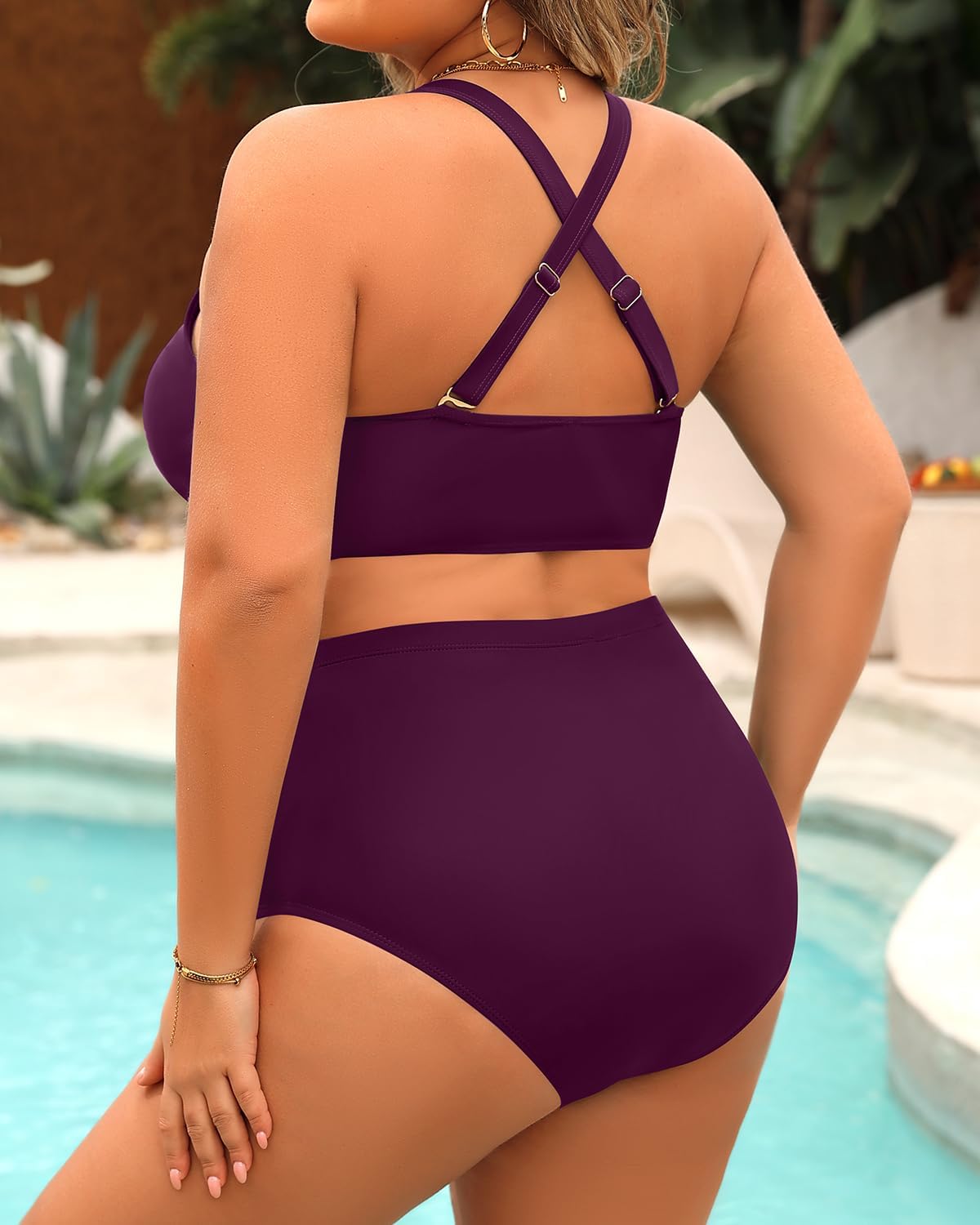
You’ve finally found a bikini top that fits your bust — and then you remember the wire. Maybe it digs in after an hour in the water. Maybe it migrates south the moment you dive under a wave. Maybe, as more than a few 36G and 38DDD owners report in aggregated reviews, the shoulder strain from a heavily boned top actually outweighs the support it provides. The good news: wire-free support for a full bust in a bikini is a real, achievable thing — it just requires knowing which construction details to look for, and which claims to ignore. This guide pulls together what we know from published specs, aggregated owner feedback, and editorial analysis so you can walk into a purchasing decision with a clear framework rather than a scroll through 30 conflicting reviews. If you’re a DD or larger and you’re done settling for either a T-shirt cover-up or a painful underwire, read on.
Why “No Underwire” Doesn’t Have to Mean “No Support”
Let’s start with the engineering premise. An underwire (the rigid curved wire sewn into the base of a bikini cup) does one job: it lifts and separates the bust by providing a firm lower-cup foundation. When you remove it, something else has to do that work. The question isn’t can a wire-free top support a DD-plus bust — across aggregated reviews, the answer is clearly yes — it’s which design features step in as the replacement architecture.
There are four mechanisms that consistently appear in owner-praised wire-free tops for full busts:
- Thick, adjustable straps (typically 1.5 inches or wider) that distribute weight across the shoulder rather than concentrating it at a narrow pressure point
- Double back bands — a second, wider elastic layer at the back that anchors the top and prevents the lift-and-ride-up cycle
- Lace-up or tie-front closures that let the wearer dial in compression and cup fit independently of the band size
- Sewn-in (non-removable) padding that shapes the cup and prevents collapse without adding hardware weight
Each mechanism has tradeoffs, and we’ll walk through all four. But first, the numbers that frame the decision.
By the Numbers
| Cup size | Owner-reported support satisfaction (wire-free) | Primary complaint with underwire |
|---|---|---|
| D–DD | High across most silhouettes | Wire migration in water |
| DDD–G | Moderate; strap width is the key variable | Shoulder strain from boning weight |
| G+ (38+) | Lower overall, but lace-up/adjustable designs outperform fixed | Gap at cup base, underwire flex |
Source: aggregated owner review patterns across multiple retail platforms, as synthesized in Glamour’s 2025 big-bust bikini roundup and Good Housekeeping’s 2025 plus-size swimsuit guide.
The pattern in aggregated reviews is consistent: the gap between underwire and wire-free support satisfaction narrows significantly once you move from fixed-band tops to adjustable-closure designs. For a 48DDD owner at 268 lbs who ordered the SOLY HUX lace-up, the lace closure was the difference between “risky experiment” and full support — her words in owner feedback, not ours.
The Four Support Mechanisms, Ranked by Tradeoff Profile
1. Thick, Adjustable Straps: The Non-Negotiable Baseline
Across every editorial source we reviewed — Who What Wear’s 2025 large-bust swimsuit guide, Harper’s Bazaar’s big-bust roundup, Good Housekeeping’s plus-size picks — wide straps are the single most consistent recommendation for wire-free support. The physics are simple: a 1.5-inch strap distributes the same load over roughly three times the surface area of a half-inch spaghetti strap. For a 38DDD bust, that difference is felt immediately.
The adjustability piece matters just as much as width. Fixed-length straps on a plus-size top are sized for a proportional average that rarely exists in real bodies — a 38DDD with a shorter torso needs a different strap length than a 38DDD with a longer one. Owners across Refinery29’s plus-size bikini coverage consistently flag non-adjustable straps as the top reason a top that “almost worked” ended up returned.
Tradeoff to know: Thicker straps on a halter-style top can concentrate pressure at the neck tie point if the knot isn’t positioned correctly. The solution — confirmed across owner feedback — is to look for tops where the neck tie attaches to structured cups rather than just fabric, so the cups themselves bear the load rather than passing it up to the knot.
2. Double Back Bands: The Anchor Most Shoppers Overlook
A single elastic back band works fine for smaller busts. For a DD-plus cup on a plus-size frame, a single band often rolls, twists, or rides up under the torque of the bust weight. A double back band — essentially two overlapping elastic layers at the back closure — creates a wider anchor point that resists that torque.
This is a spec detail that’s easy to miss in product photography. The way to check: look for product descriptions that explicitly mention “wide back band,” “double layer back,” or “racerback panel.” Owners who praise the Aqua Eve sporty bikini top in aggregated reviews consistently highlight the back construction as the reason the top doesn’t shift during swimming — the sewn-in pads (see below) get most of the headline attention, but the back structure is doing as much work.
Tradeoff to know: Double back bands add bulk at the back. In a wrap or tie-side style, this bulk can look and feel heavier than expected. For poolside lounging, this rarely matters. For active water sports or ocean swimming, it’s the right tradeoff.
3. Lace-Up and Tie-Front Closures: The Adjustability Wildcard
Lace-up tops are having a sustained moment in plus-size swimwear, and for full-bust shoppers, the appeal is functional, not just aesthetic. A lace-up closure lets you tighten or loosen cup compression independently of band size — which matters when your cup measurement and your band measurement don’t scale at the same rate (which, for most DD-plus women, they don’t).
The 48DDD owner who documented her SOLY HUX lace-up experience in owner feedback made this exact point: standard sizing would have told her the top didn’t fit. The lace system let her create the fit. That’s the core value proposition.
One important caveat from the same review corpus: lace-up tops require active adjustment. If you’re not willing to retighten after heavy wave activity or a long swim, the fit degrades. They’re not set-and-forget the way a structured underwire is.
Tradeoff to know: Tie-back and lace-up tops can loosen gradually in active water use. Owners in ocean settings — particularly the Aqua Eve navy swim dress reviewer who documented a wave-induced wardrobe malfunction in the Caribbean — recommend sizing down from your usual fit when ordering lace or tie styles for active ocean swimming. The lesson there is vivid and specific: waves exert lateral pull that a loose tie doesn’t resist. Snug fit on land should be your baseline, not comfortable-loose.
Are lace-up tops more secure than tie-back tops in waves? Generally, yes — a lace-up distributes tension across multiple contact points rather than concentrating it at a single bow knot. But neither style is as mechanically secure as a hook-and-eye or swimwear clasp closure. For heavy surf, a racerback or fixed-strap style with structured cups may outperform both.
4. Sewn-In Pads: Stability Over Flexibility
Removable pads have a persistent reputation problem in full-bust swimwear: they shift, they bunch, and they create an air pocket at the bottom of the cup that the bust then has to displace. For smaller cups, this is mildly annoying. For a 34G or larger, it can mean the top visually “breaks” at the cup base within minutes of swimming.
Sewn-in (non-removable) pads address this by bonding the pad structure to the cup lining. A 34G owner reviewing the Aqua Eve sporty bikini specifically praised this feature — the pad stays exactly where the designer intended it, which means the cup shape holds through activity. Good Housekeeping’s plus-size swimsuit coverage echoes this, noting that sewn-in construction is more reliable for active wear in larger cup sizes.
Tradeoff to know: Sewn-in pads can’t be removed for drying, which means longer dry times and potential for mildew in a wet bag. They also mean you’re locked into whatever coverage level the pad provides — there’s no “remove the pad for a different silhouette” option. For most DD-plus shoppers prioritizing support over versatility, this is a reasonable tradeoff.
Sizing Strategy: Should You Size Up for Bust Fit?
This is the question that generates the most owner confusion in full-bust wire-free bikini shopping, and the honest answer is: it depends on the closure type.
For fixed-band, fixed-strap tops, sizing up for cup fit means a looser band and potentially loose bottoms. The Yonique ribbed bikini illustrates this clearly in owner feedback: one reviewer ordered a size 22 for cup room and ultimately found an 18 worked — the sizing runs notably generous, and over-ordering to accommodate the bust meant unnecessary bulk everywhere else. The lesson from this specific top is to check the brand’s size chart cup-to-band ratio before defaulting to “size up.”
For lace-up and tie-front tops, sizing up is less penalizing because the closure compensates. You can take in the fit where you need to and leave it loose where you don’t.
For bottoms — particularly high-waisted styles — back coverage is the variable most shoppers don’t think about until they’re in the water. High-waisted bottoms vary significantly in rise depth at the back; some provide full coverage through the seat, and some sit low enough at the back that a size up is genuinely warranted. The clearest signal is owner photos (not model photos) in aggregated reviews, which tend to show real-world back coverage far more honestly than official product imagery.
Frequently Asked Questions
Can a wire-free bikini top actually support a 38DDD or larger bust in the water? Yes — owner feedback at this size range consistently confirms it, but the top needs at least two of the four support mechanisms outlined above: wide adjustable straps, double back band, structured cups with sewn-in pads, or an adjustable closure. A thin-strapped soft-cup triangle top is not a support mechanism; a structured halter with a wide band and sewn-in cups is.
Will sewn-in pads stay in place better than removable ones during swimming? Across aggregated reviews, yes. Sewn-in pads are bonded to the cup structure and can’t migrate. Removable pads shift under water pressure, particularly in active swimming. For a DD-plus bust where pad position affects the entire cup silhouette, sewn-in construction is the more reliable choice.
Should I size up for bust fit and risk the rest being too loose? It depends on the top’s closure system. Fixed tops — yes, this is a real tradeoff and may not be worth it. Lace-up or tie-front tops — sizing up is more manageable because you can cinch to fit. Always cross-reference the brand’s size chart for cup-to-band proportions, and read owner reviews specifically from reviewers who share your measurements, not just your size number.
How do I know if a high-waisted bottom will provide enough coverage at the back? Published size charts show front rise; they rarely address back rise explicitly. The most reliable signal is owner-submitted photos in aggregated reviews, which show real back coverage. As a rule, fuller coverage styles that are labeled “full coverage” or “cheeky-free” in product descriptions tend to have deeper back rises than styles labeled “retro” (which often sits lower at the back than the name implies).
Are lace-up or tie-back tops more secure for large busts in waves? Lace-up tops generally outperform single-bow tie-back styles in active water because load is distributed across multiple lace points rather than one knot. But the most important variable is fit on land: per the Caribbean wardrobe malfunction documented in owner feedback for the Aqua Eve navy swim dress, a top that feels slightly snug on the beach is the right baseline for ocean swimming. Comfortable-loose on land becomes loose-loose in surf.
The bottom line for a DD-plus shopper evaluating wire-free bikini tops: if support is your primary goal, prioritize adjustable closure systems and wide-strap architecture over any single aesthetic silhouette. The wire isn’t doing irreplaceable work — it’s just doing work that these other features can replicate when the construction is right. Know which mechanism you’re buying, check the owner feedback for your specific size range, and don’t trust a product photo that doesn’t show a real body in the water.