June 12, 2026 • Adaeze Okonkwo • 10 min reading time • Prices verified June 18, 2026
High-Waisted Plus-Size Bikinis: Strap Architecture and Tummy Panel Engineering Compared
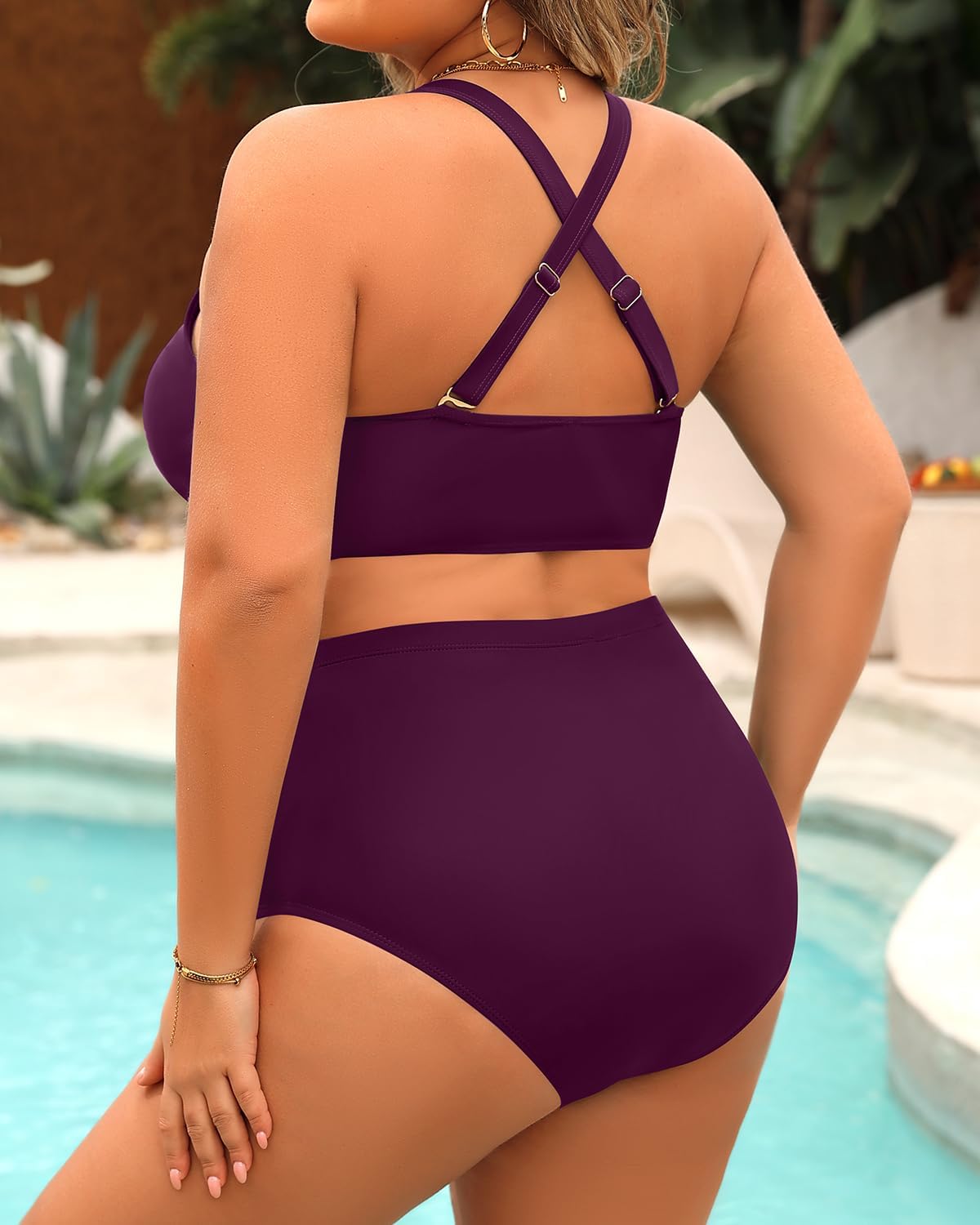
You’ve found a high-waisted bikini that looks perfect in the product photo — high coverage in front, cute ruching on the sides, promising “tummy control.” But you’ve been here before. The bottom arrives, you try it on, and within twenty minutes the panel has rolled down, the waistband is cutting into your hip, and the front seam is pulling in exactly the wrong place. Here’s the thing: that failure isn’t about your body — it’s about the construction. A high-waisted bikini bottom is essentially a structured garment with a compression layer built into swimwear fabric, and whether it holds depends on seam placement, the type of inner lining, and how the waistband is attached. This guide breaks down the actual engineering differences between the most-discussed options at the $40–$180 price range, so you can read a product listing like a blueprint instead of a wish. We’ve pulled this together from published specs, aggregated buyer reviews, and editorial reporting — all organized so you don’t have to chase 30 browser tabs.
| EDITOR'S PICK[Yonique Womens Plus Size Bikini](https://www.amazon.com/dp/B08W1TKX58?tag=greenflower20-20)… | Mid-tier[Hanna Nikole Womens High Waiste](https://www.amazon.com/dp/B0CYH4T5ZS?tag=greenflower20-20)… | Budget pickDaci Women's Plus Size Bikini S… | |
|---|---|---|---|
| Size range | 16 Plus | X-Large | 18 Plus |
| Color | Purple | Dark Green & Pink Flowers | Army Green |
| Ruched | — | ✓ | — |
| Price | $36.99 | $35.99 | $35.99 |
| See on Amazon → | See on Amazon → | See on Amazon → |
Why High-Waisted Bottoms Fail (And What “Tummy Control” Actually Means)
Let’s start with the most misused phrase in plus-size swimwear marketing: tummy control. InStyle’s 2024 feature “How Tummy Control Panels Actually Work in Swimwear” draws a sharp line between two very different constructions that both get labeled with that phrase.
Type 1: Compression lining panels. These are an inner layer of higher-denier (thicker, denser) fabric — often a nylon-spandex or PBT (polybutylene terephthalate) blend — sewn into the front panel of the bottom. The outer fabric is decorative; the inner layer does the structural work. When this is done well, the compression layer has its own seam allowance, is anchored at the waistband and at the leg opening, and stays put under movement. When it’s done cheaply, the inner layer is cut slightly too small, which creates the rolling-and-curling problem within the first hour of wear.
Type 2: Fabric ruching used as compression theater. Gathered or ruched front panels create visual softening, not actual hold. They can be flattering — Refinery29’s 2025 roundup “The Best Plus-Size Bikinis for Every Body Type” notes that diagonal ruching genuinely redirects the eye and works well for softer silhouettes — but ruching with no structural inner layer will not compress or smooth. It’s a styling choice, not an engineering one.
Understanding which type you’re looking at before you buy is the first decision gate.
The Three Construction Details That Separate Good from Great
Once you’ve confirmed a bottom has a genuine compression lining, the quality gap between a $45 option and a $140 option comes down to three specific construction variables. Good Housekeeping’s 2025 “Best Plus-Size Swimsuits” roundup flags all three as differentiators in their evaluation methodology.
1. Waistband Attachment Method
The waistband of a high-waisted bottom is its most structurally stressed point — it has to anchor the front panel against the pull of movement and water resistance. There are two dominant construction approaches:
Bonded or taped waistband: A strip of firm elastic is enclosed in fabric and attached via flat-felled seam — a seam where both raw edges are folded under before stitching, creating a flat, reinforced join. This distributes tension across a wider surface area, which is why brands like Miraclesuit and Magicsuit consistently appear in long-wear editorial reviews for waistbands that stay in place. Owners across aggregated reviews for those brands frequently note that the waistband “doesn’t move or dig” even after extended pool time — that’s the flat-felled attachment doing its job.
Overlocked edge with single-needle topstitch: This is the fast-production alternative. It works adequately in sizes 12–16, but buyers in sizes 20W–26W consistently report the waistband beginning to curl outward after several wears because the single-stitch attachment cannot handle the additional lateral tension of a fuller hip-to-waist ratio. This is the exact failure mode Glamour’s 2025 feature “High-Waisted Bikini Bottoms That Actually Stay Up” attributes to several under-$60 options that looked nearly identical to their higher-priced counterparts in product images.
2. Compression Panel Anchoring at the Leg Opening
The compression liner needs two anchor points to stay in position: the waistband (top) and the leg opening (bottom). Without leg-opening anchoring, the liner migrates upward during movement — the “bunching” complaint that dominates one-star reviews for otherwise well-liked styles.
Better-constructed options sew the compression layer directly into the leg-opening seam with the same stitch used for the outer fabric, so the two layers move as one. Budget options often leave the liner floating — technically hemmed separately, but not integrated into the leg seam. You can sometimes identify this by examining the interior of the bottom: if you can pinch the inner lining away from the outer fabric at the leg edge, it is not anchored there, and it will migrate.
3. Fabric Blend and Chlorine / Saltwater Resistance
This matters more for high-waisted styles than for standard bikini bottoms because compression panels lose their hold as elastic degrades. Swimwear365’s fabric technology guide “PBT vs Xtra Life Lycra” distinguishes between standard nylon-elastane blends (which lose elasticity faster under chlorine exposure) and fabrics incorporating Xtra Life Lycra or PBT fiber, which are rated to retain their stretch-recovery properties significantly longer under repeated chemical exposure.
By the numbers:
- Standard nylon-elastane: rated for approximately 10× chlorine exposure before measurable elasticity loss (industry standard baseline)
- Xtra Life Lycra blends: rated for approximately 20× chlorine exposure before comparable degradation
- PBT-based fabrics: chlorine resistance equivalent to Xtra Life Lycra, with the additional advantage of faster dry time
For a high-waisted bottom you’re planning to wear weekly across a full summer season, fabric grade is not a luxury consideration — it’s a longevity calculation.
Price Tier Comparison: What You’re Actually Buying at Each Level
The construction variables above map predictably onto price tiers. Here is how they break down for the ranges most commonly compared by plus-size swimwear shoppers.
Budget Tier: $35–$65 — ASOS Curve, Amazon Essentials, City Chic
At this price point, you are generally getting Type 1 compression lining (present, but not always anchored at the leg opening), an overlocked waistband attachment, and a standard nylon-elastane blend. Refinery29’s 2025 “The Best Plus-Size Bikinis for Every Body Type” notes that ASOS Curve high-waisted styles consistently deliver better-than-expected top support — but buyer feedback in sizes 20W and above flags the bottoms specifically for waistband migration after the first few wears.
Best use case: A supplemental piece for one or two vacations, or a lower-stakes way to test whether a particular silhouette works for your body before investing in a premium version of the same style.
Tradeoff to name explicitly: The compression lining will likely soften noticeably by the end of the first season if you are a regular swimmer. For occasional resort wear, that timeline may be entirely acceptable.
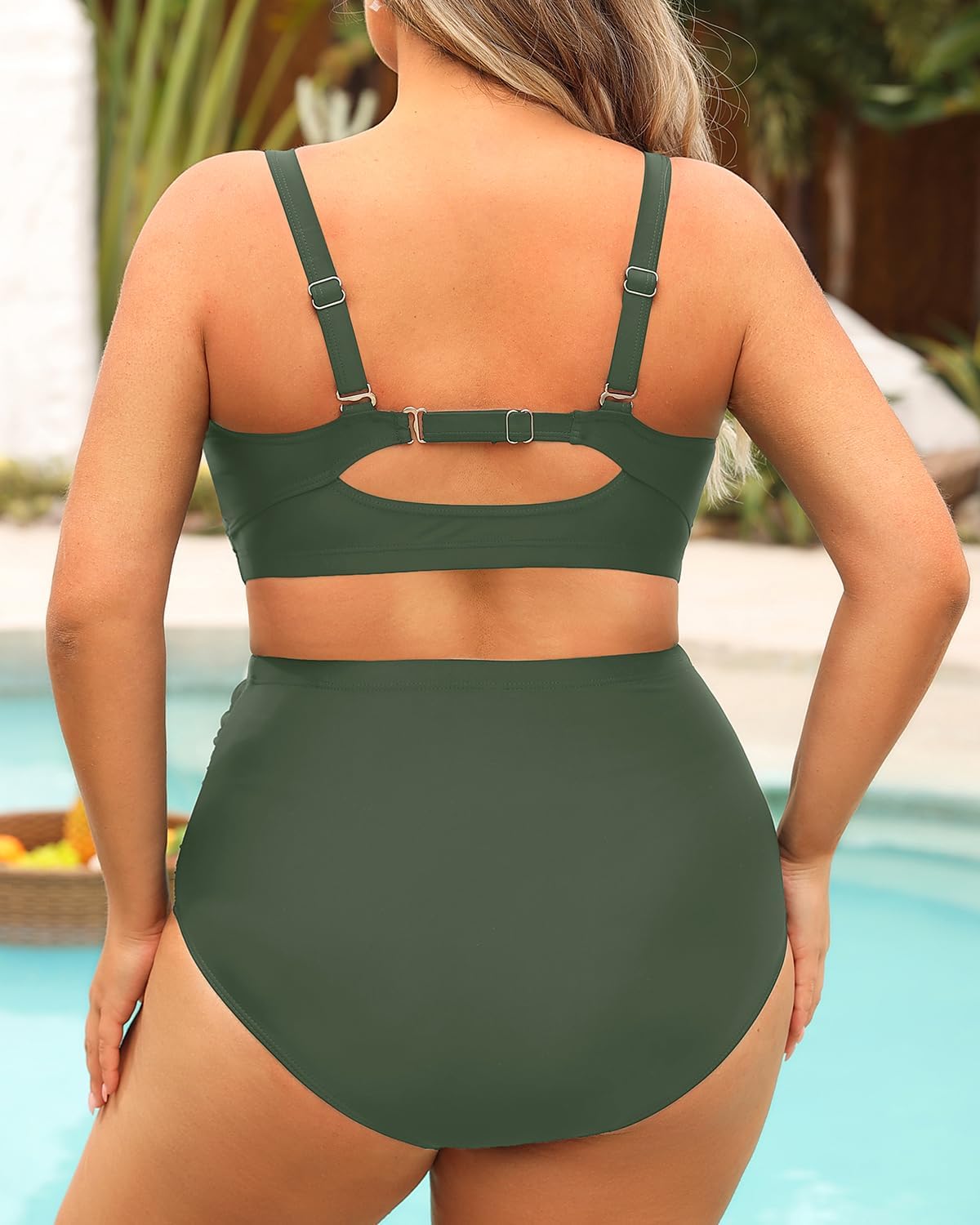
Daci
$35.99
In stock on Amazon
Check price on AmazonMid-Range Tier: $70–$130 — Swimsuits For All, Lands’ End, Eloquii
This tier is where construction meaningfully upgrades. Lands’ End is consistently cited in Good Housekeeping’s swimwear coverage — including their 2025 “Best Plus-Size Swimsuits” roundup — for using flat-felled waistband construction across their high-waisted styles, which is why their bottoms generate far fewer rolling complaints in buyer reviews compared to similarly priced competitors. Swimsuits For All’s Chlorine Resistant line uses PBT-blend fabric, confirmed in their published product specifications, which makes these a genuinely better long-term value for lap swimmers.
At this tier you also begin to see honest size-range calibration: separate waistband curve grades for sizes 22W and above, rather than a single pattern graded up from a size 14 base. This matters because a pattern graded up from a smaller base often creates a rise that is too short for a fuller abdomen, even when the hip measurement is technically correct. Buyers in larger sizes consistently note this distinction in long-form reviews of mid-range brands.
Best use case: Your primary-season piece if you are swimming regularly and want construction that holds across a full summer without refreshing every year.
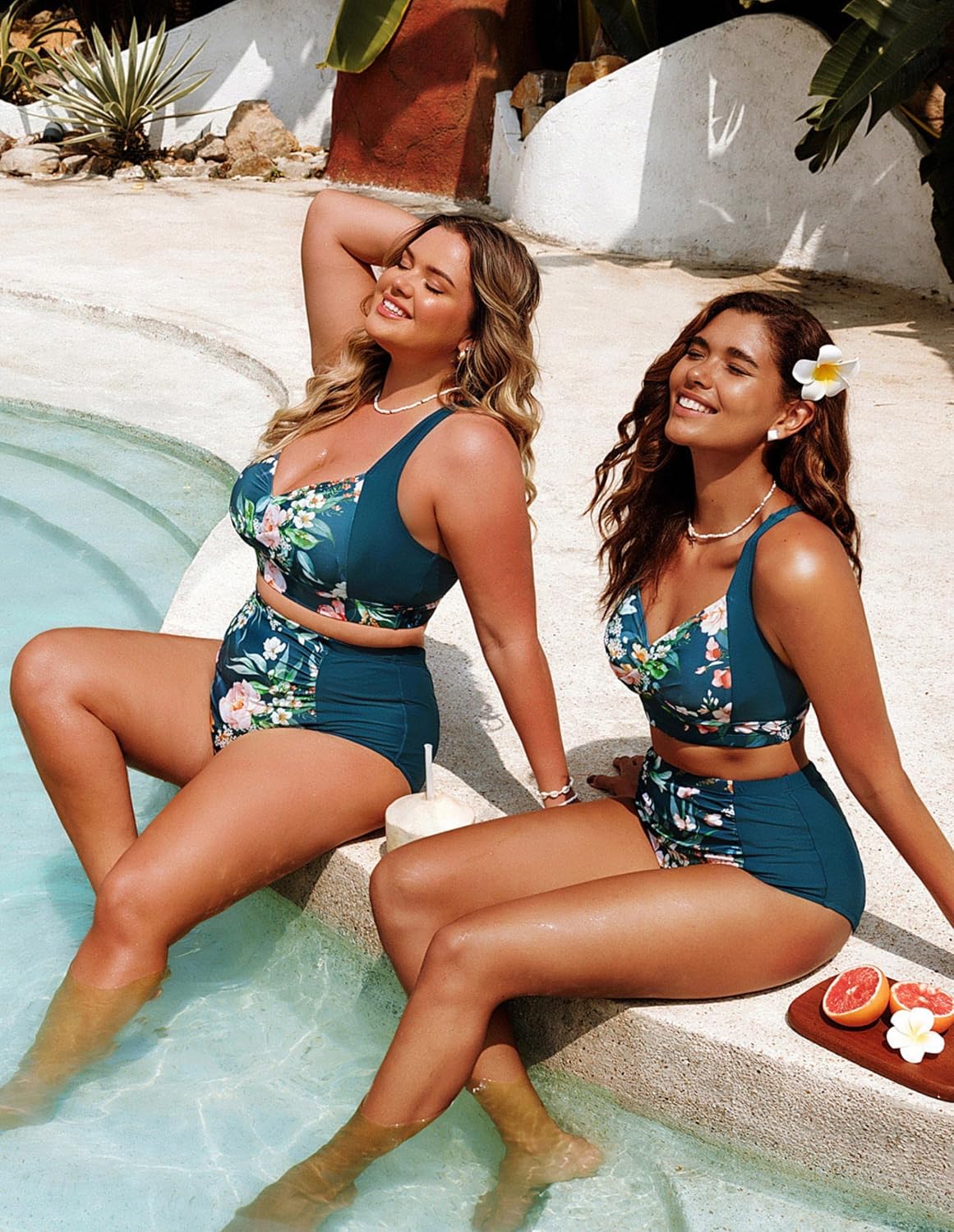
Hanna
$35.99
In stock on Amazon
Check price on AmazonPremium Tier: $140–$220 — Miraclesuit, Magicsuit, Anita
This is where the engineering becomes clinical. Miraclesuit’s published product architecture describes their inner-panel construction as a separate structured garment enclosed within the outer swimsuit — a fundamentally different approach from sewing a compression layer into an existing cut. Owners in aggregated reviews across multiple retailers consistently describe the hold as “immediate” and report that the suit “doesn’t require adjusting” throughout a full day of wear. That result is the compounding effect of an anchored compression liner, flat-felled waistband, and Xtra Life Lycra working together.
Anita’s high-waisted styles — developed out of their clinical mastectomy swimwear line — carry strap architecture from that specialized category into standard high-waisted bikini tops. Their published strap specifications include reinforced attachment points at both the shoulder and the back strap junction, distributing bust weight differently than standard swimwear straps. For cup sizes D and above, this construction difference determines whether a bikini top is genuinely wearable past the first hour. Self magazine’s swimwear coverage has noted Anita among the brands engineering specifically for fuller bust support rather than simply scaling up a standard pattern.
Tradeoff to name explicitly: At $180–$220 for a two-piece, you are paying for engineering that will hold across multiple seasons — but you are also committing to a style with less trend flexibility. These are investment pieces, not fashion-forward experiments.
Yonique
$36.99
In stock on Amazon
Check price on AmazonReading a Product Listing Like a Practitioner
You won’t always receive a detailed spec sheet. Here is a fast framework for evaluating any high-waisted bottom listing before you commit:
Green flags:
- “Compression lining sewn to leg opening” or equivalent explicit language
- Fabric content includes Xtra Life Lycra, PBT, or chlorine-resistant nylon specification
- Size range includes dedicated fit notes for sizes 20W and above — not just a graded-up single size chart
- Return policy allows try-on (with or without sanitary liner) — this is non-negotiable for assessing construction against your body
Red flags:
- “Tummy control” appears in the product title with no lining detail in the description
- Fabric listed simply as “nylon/spandex” with no further specification
- A single size chart applied uniformly across a 12–26W range with no mention of waistband curve adjustment
- Only one or two product images, none showing the interior lining construction
The Decision Rule
If you are in a size 12–18, swim occasionally, and want to test a high-waisted silhouette before committing: start at the $45–$65 budget tier, accept that the construction is largely a one-season proposition, and use the fit data you gather to inform a higher-confidence purchase later.
If you are in a size 20W–26W or above, swim regularly, and have been burned by waistband rolling or lining migration before: skip the budget tier entirely. The construction variables that cause those failures are not solvable at that price point. Go directly to the $100–$130 Lands’ End or Swimsuits For All construction tier as your floor, and treat Miraclesuit or Magicsuit as the ceiling if budget allows and sustained all-day hold is the priority.
If bust support is the driving concern alongside tummy coverage: the top and bottom are separate engineering problems. A high-waisted bottom with excellent panel construction does not compensate for a top built without reinforced strap attachment. Anita’s published strap architecture specifications are worth reading before you dismiss the premium price — they are building to a different standard than most swimwear brands, and multi-season owner reviews consistently bear that out.
The suit that stays put, holds its shape through a full pool day, and still looks the way it looked in the morning is an engineering outcome. Now you have the blueprint to find it.