May 7, 2026 • Adaeze Okonkwo • 10 min reading time • Prices verified June 18, 2026
Plus-Size Swimsuit Sizing Chaos: Why the Same Number Fits Completely Differently Across Brands
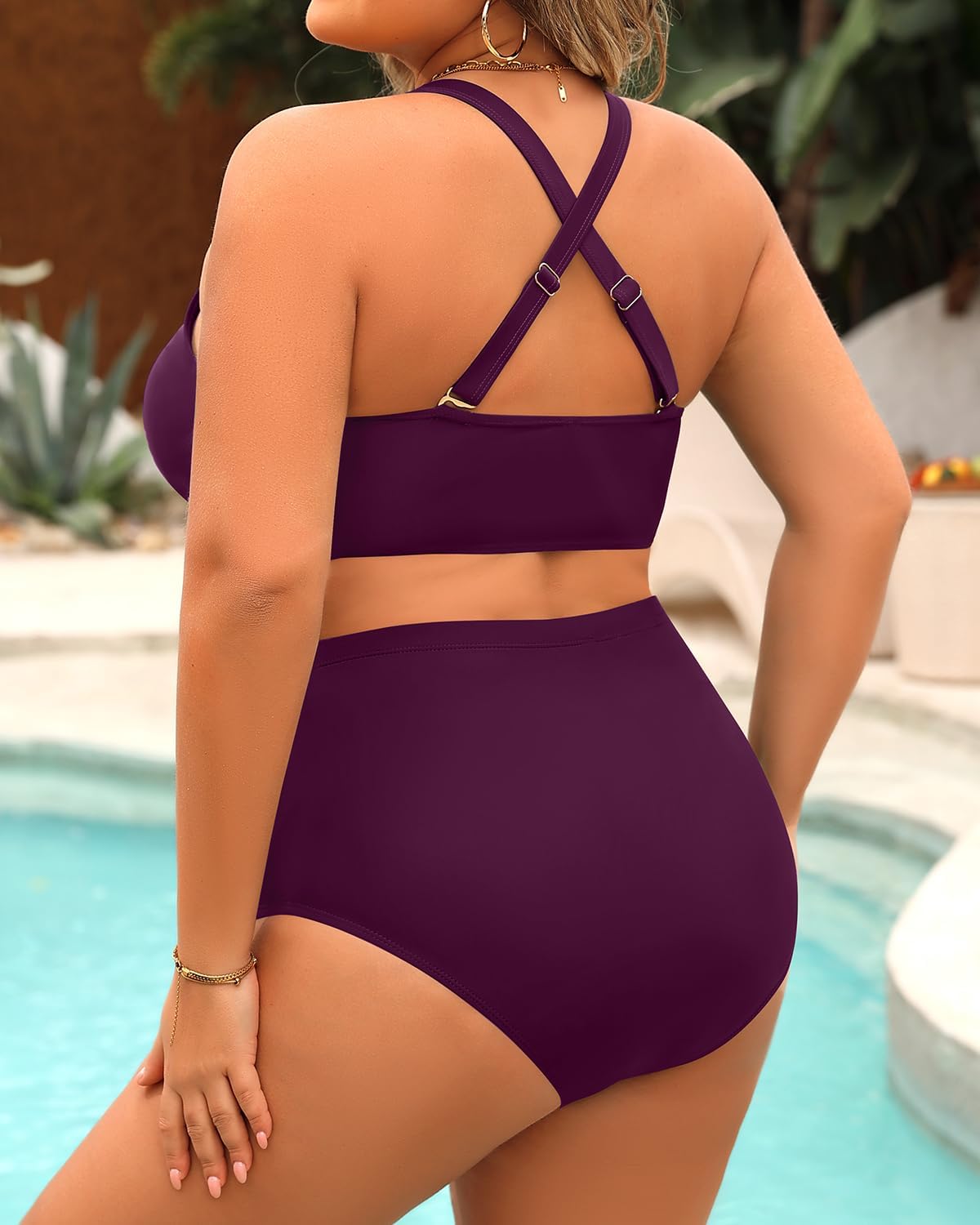
You measured yourself carefully. You checked the size chart. You ordered a 20 — the same size you’ve worn in that brand for two years — and when the suit arrived, it pinched at the leg openings, gaped at the bust, and rode up like it was a size smaller. Sound familiar? This is the most common frustration we hear from plus-size swimwear shoppers, and we want to be clear upfront: the inconsistency is real, it is structural, and it is not your fault. Plus-size swimsuit sizing (the number on the tag, like 16W or 3XL, that is supposed to correspond to your body measurements) varies dramatically across brands because there is no industry-wide standard governing how those numbers are defined. A “size 22” is a brand’s internal decision, not a universal specification. This guide organizes everything you need to understand that gap — and buy around it — so you don’t have to piece it together from 30 conflicting review threads.
The Core Problem: There Is No Governing Standard for Plus-Size Swimwear Sizing
The U.S. has no mandatory sizing standard for women’s apparel or swimwear. The voluntary ASTM International standard (D5585, last updated in 2021) provides measurement ranges for “misses” sizing but has minimal adoption in plus-size categories, and swimwear manufacturers regularly deviate even where it technically applies. Per Refinery29’s reporting on swimsuit sizing confusion, brands set their own blocks — meaning the internal template a factory cuts from — and those blocks can differ by two or more inches at the hip or bust between two brands calling themselves the same size.
This plays out in user reviews in a remarkably specific way. Reviewers of the Yonique ribbed high-waisted bikini document ordering a size 22 based on the published size chart, then exchanging down to an 18 — a two-size gap — with no change in body. Reviewers of the Aqua Eve tankini report two suits ordered in the same size but different colorways fitting noticeably differently from each other, which points to a secondary problem: even within a single brand, colorway-specific production runs can come from different factories or fabric lots with slightly different stretch recovery. Reviewers of the Speedo one-piece noticed that different size ranges within the same style had visibly different fabric weight — meaning a size 16 and a size 20 in the same suit are not simply scaled versions of each other.
Why does fabric weight matter for fit? Swimsuit fabric stretch is not linear. A heavier-weight fabric in a larger size will return to its original shape differently than a lighter-weight version of the same style in a smaller size. That changes how much ease (the deliberate extra room built into the cut so the suit doesn’t bind) you actually experience in the water.
How Brand Construction Philosophy Drives Size Discrepancy
Understanding why brands land so differently on sizing helps you predict what will happen before you order.
Fast-Fashion and Import Brands: The “Grade Up” Problem
Brands like Blooming Jelly and Holipick — popular import-market options in the plus-size swim category — are engineered to a base size (often a US 8–10 equivalent) and then graded up, meaning the pattern is scaled mathematically to larger sizes. The problem is that grading up does not replicate the proportional changes in a real body. Reviewers of the Blooming Jelly swim dress consistently note that the brand’s own size chart instructs buyers to order two full sizes above their normal clothing size — and that guidance is accurate. That is not a flaw in the chart; it reflects that the grading formula produces a smaller-than-expected finished garment. Similarly, Holipick three-piece athletic set reviews document a repeating pattern of tightness specifically at the waist and leg openings, while the torso fits correctly. That is a classic grading artifact: the waistband and leg channel proportions did not scale at the same rate as the body of the suit.
Mid-Range and Specialty Brands: Separate Plus-Size Blocks
Brands with dedicated plus-size lines — Swimsuits For All, Lands’ End, and Eloquii among them — typically engineer separate pattern blocks for plus sizes rather than grading up from a straight-size template. This generally produces better proportional fit for a full bust-to-hip differential (the measurement gap between your bust circumference and hip circumference, which in many plus-size bodies exceeds 14 inches). Per Good Housekeeping’s swimsuit coverage, brands using dedicated plus-size blocks also tend to position underwire channels and strap attachment points differently, because the geometry of support changes when bust and torso measurements are both larger.
Premium and Performance Brands: The Production-Run Variable
Even at the premium tier — Gottex, Miraclesuit, Anita Care — sizing can shift between production seasons. Because these brands produce in smaller runs and sometimes shift manufacturing facilities, the same style number in a size 18 from a 2024 production run may measure slightly differently from a 2025 run. This is what Speedo reviewers were observing when they noted different fabric weights across sizes. It is worth checking whether a retailer publishes a production year or seasonal indicator for premium suits before ordering.
By the Numbers: What a Two-Size Gap Actually Means in Inches
| Size Label | Typical Hip Range (Brand A: import grade-up) | Typical Hip Range (Brand B: dedicated plus block) |
|---|---|---|
| 1X / 16W | 42–44 in | 44–46 in |
| 2X / 18W–20W | 44–46 in | 46–49 in |
| 3X / 22W–24W | 46–48 in | 49–52 in |
Source: aggregated from published brand size charts reviewed by Self’s fit guide team and Glamour’s plus-size swimwear coverage. These ranges illustrate why a size 22 in an import brand can feel like an 18 from a dedicated plus-size label — the hip measurement difference at the “same” label can be four to six inches.
How to Protect Your Order Before You Buy
This is where the practitioner’s advantage lives. You are not guessing at sizing — you are building a decision framework.
Step 1: Take four measurements, not one. Most shoppers measure only their hip or waist. Before ordering any plus-size swimsuit online, Self’s measurement guide recommends capturing: (1) full bust — across the fullest part; (2) underbust — directly under the breast tissue; (3) natural waist — the narrowest point; and (4) high hip — about four inches below the waistline, which is where most swimsuit leg openings sit. Your high hip often differs significantly from your full hip, and it’s the measurement that predicts leg-opening fit.
Step 2: Identify which measurement is your “conflict point.” If your bust and hips fall in different size ranges on a given brand’s chart — say, your bust says size 18 and your hips say size 22 — you have a proportionality challenge. For a one-piece, the general guidance across Who What Wear’s plus-size swim coverage is to size for the larger measurement and use adjustable straps to correct the fit at the shoulders and bust. For a two-piece, size the top and bottom independently when the brand allows it.
Step 3: Treat the size chart as a starting point, not a verdict. For import-market brands, search the product’s reviews specifically for buyers who have listed their measurements alongside their size purchased. Reviewers often provide data like “5’8, bust 36F, 35-inch waist, 43.5-inch hips, 204 lbs — ordered 3XL, fit perfectly at the hips but needed a safety pin at the bust.” That is a calibration anchor. One matching body type tells you more than the size chart alone.
Step 4: Prioritize retailers with hassle-free return policies. Because sizing variance is structural and not predictable from charts alone, the retailer’s return window is a functional part of your sizing strategy. Retailers that require a sanitary liner to be intact (standard practice) but offer free return shipping and 30-plus-day windows give you room to order two sizes and send back the one that doesn’t work. This is not indulgent — it is the rational response to a measurement system that does not standardize.
The “Plus” Designation Is Not What You Think
A final point that surprises many shoppers: plus-size numeric sizing (16 Plus, 18 Plus, 16W, 18W) is not the same as standard numeric sizing in the same number. A size 16 in standard sizing (sometimes called “misses”) is cut with narrower hips and a straighter torso than a size 16W or 16 Plus. The “W” or “Plus” designation signals a different block with more room through the hip, seat, and often the torso length — but the degree of difference varies by brand. Per Glamour’s plus-size swimwear guide, some brands treat “W” as a minor width adjustment; others rebuild the pattern entirely. When a brand does not specify, the safest approach is to add two inches to the hip measurement you’d normally use to select a standard size before checking against that brand’s plus-size chart.
Frequently Asked Questions
Why does the same size fit so differently between swimwear brands? Because there is no mandatory industry standard governing what measurements a size number must correspond to. Each brand sets its own internal block, and those blocks can differ by four to six inches at the hip for the same label. Brands that grade up from straight sizes and brands that build dedicated plus-size blocks will produce meaningfully different finished garments at the same size number.
Should I order my measurements size or go up for stretch? It depends on the brand category. For import-market brands (Blooming Jelly, many 3XL-range budget options), published size charts and reviewer consensus typically point to ordering one to two sizes up from your clothing size. For dedicated plus-size labels, ordering to your measurements is generally reliable. When in doubt, let the reviews from people with your specific measurements guide you — not the chart alone.
How do I size when my bust and hips are in different size ranges? For one-pieces, size to the larger measurement (usually hips) and adjust the torso length and straps. For two-pieces, size the top and bottom independently. Look for brands that sell separates or offer top-bottom sizing flexibility, which is increasingly common in the mid-range and premium tiers.
Is plus-size numeric sizing (16 Plus, 18W) the same as standard sizing? No. A 16W is cut for wider hips and a different torso proportion than a standard 16. The degree of difference varies by brand — some treat it as a modest adjustment, others as a full pattern rebuild. Always check the hip measurement on the size chart, not just the number.
What measurements should I take before ordering a plus-size swimsuit online? Per Self’s measurement guide: full bust, underbust, natural waist, and high hip (four inches below the waist). Add your torso length — shoulder to crotch — if you are ordering a one-piece, as torso length determines whether the suit will ride up. These four to five numbers give you a real calibration tool rather than a clothing-size guess.
Sizing in plus-size swimwear is genuinely inconsistent at the industry level — not a problem you can solve by measuring more carefully or choosing more carefully within a single brand’s chart. The decision rule: if the brand grades up from straight sizes, assume you need to go up and let reviewer measurement data calibrate how much. If the brand publishes a dedicated plus-size block and has consistent reviewer feedback, trust your measurements against their chart. And if the retailer’s return policy is punitive, that is a fit risk you are absorbing before you even open the package. Buy accordingly.