June 19, 2026 • Adaeze Okonkwo • 9 min reading time • Prices verified June 18, 2026
Plus-Size Swimsuits After Weight Loss, Postpartum, and Body Transition: What Fits a Body in Flux
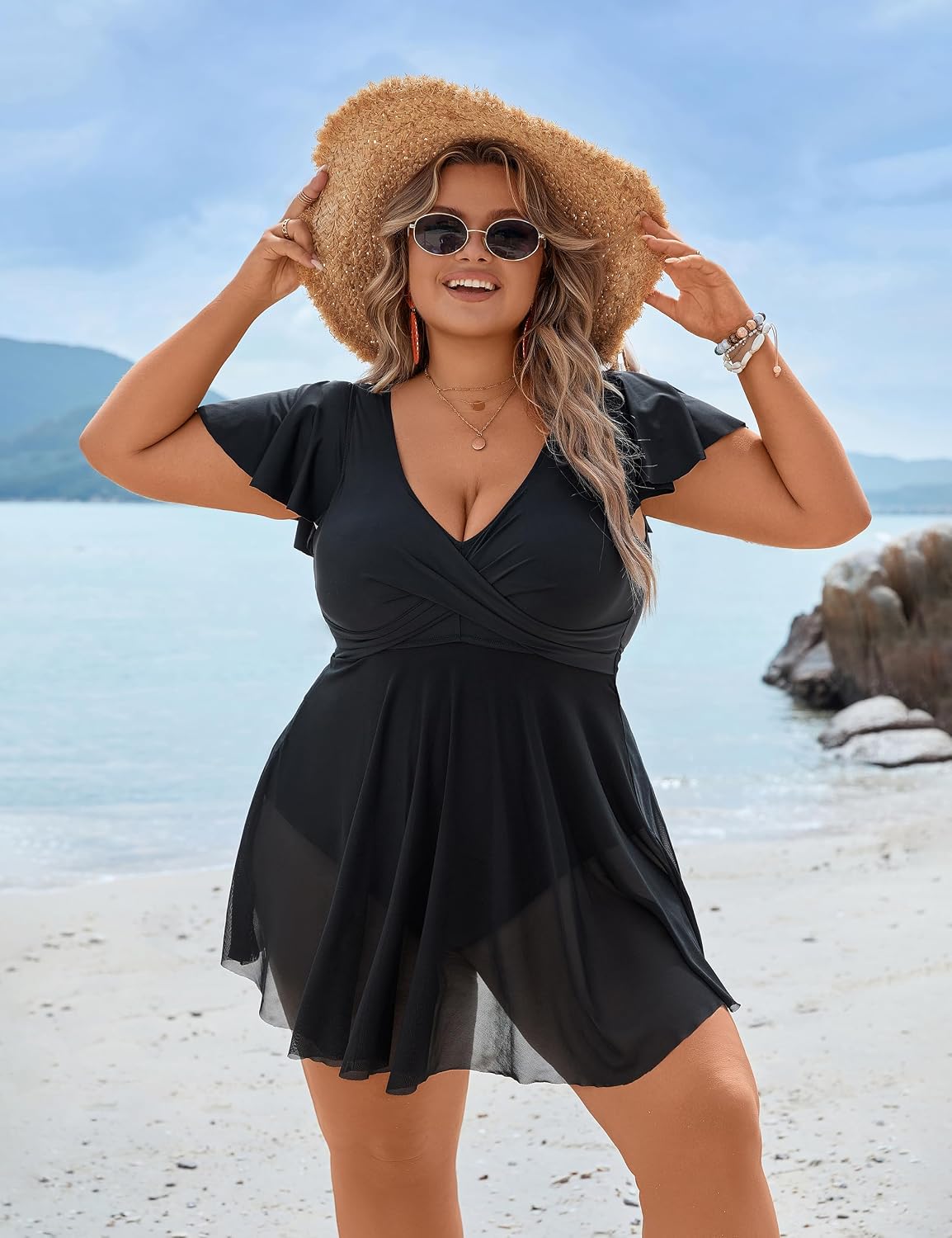
You’ve just had a baby — or you’re ten, twenty, thirty pounds into a weight-loss journey — and summer is arriving whether you’re ready or not. The challenge isn’t just finding a swimsuit that fits. It’s finding one that fits right now, for a body that may look entirely different in three months. That’s what we mean by a “transitional body”: a silhouette actively in motion, where the bust, waist, hip, and torso measurements you’d normally anchor a purchase to are all moving targets. This article is the information you need to make a confident choice today. We’ve organized it so you don’t have to dig through 30 tabs of conflicting size charts and generic “flattering tips.” Instead, we’ll walk through the real tradeoffs — budget ceiling, silhouette strategy, sizing tactics — drawing on aggregated reviewer experiences and published fit guidance so you can pick something that works for this vacation, not the hypothetical future one.
The core decision you’re actually making isn’t style. It’s: how much fit precision do I need right now, and how much sizing flexibility am I willing to trade for it? Everything else — ruching, swim dress vs. one-piece, adjustable straps — is a tool in service of that answer.
| EDITOR'S PICKAqua Eve Womens Plus Size One P… | Mid-tierYonique Women Plus Size One Pie… | Budget pickHanna Nikole Women One Piece Sw… | |
|---|---|---|---|
| Coverage | Full Coverage | — | — |
| Style | — | Twist Front Ruched | Twist Ruched Flowy |
| Features | — | — | Push Up |
| Color | Black | Black | Army Green |
| Price | $39.99 | $36.99 | $22.99 |
| See on Amazon → | See on Amazon → | See on Amazon → |
The Budget Ceiling Psychology Is Real (and Rational)
One of the most consistent patterns in plus-size transitional swimwear reviews is what we’d call the budget cap mindset: buyers actively resist spending premium prices on a suit they expect to wear once or twice before it no longer fits. A reviewer of the Aqua Eve high-neck one-piece captured this precisely, describing herself as “mid weight-loss and didn’t want to spend a ton of money on a new suit for vacation where it would only likely be used once.” This is not irrational. It’s a clean cost-per-use calculation applied to an uncertain timeline.
The tradeoff you’re actually navigating:
| Approach | Upside | Downside |
|---|---|---|
| Budget suit ($35–$60), size up | Low sunk cost if body changes | Thinner fabric, less structural support, may gap or bag early |
| Mid-range suit ($70–$120), buy for now | Better construction, ruching absorbs size variance | Still a loss if shape changes significantly in 60 days |
| Invest in adjustable architecture ($130–$220) | Straps, ties, and wrap elements adapt as you change | Higher upfront; worth it only if you’re near stabilization |
Per Glamour’s 2025 roundup of plus-size swimwear, suits with tie-waist or adjustable side-cinch details offer the broadest range of wearable sizes — often spanning two full sizes in practice — which makes them a stronger value proposition during transition than a fitted underwire one-piece at the same price point.
Our read: if you’re more than 15–20 pounds from your anticipated stable weight, cap your spend at the mid-range and prioritize ruching and adjustable straps. If you’re within one size of where you expect to land, it’s worth investing in a suit with better structural support because you’ll actually wear it into next season.
Silhouette Strategy for a Body in Flux
Ruched One-Pieces: The Stretch Math
Ruching — those gathered fabric folds along the torso — is the single most effective design feature for transitional bodies, and it’s worth understanding why it works mechanically, not just aesthetically. Ruched panels are intentionally cut with extra fabric folded into the seam, which means the suit can stretch outward (accommodating a larger measurement) or stay gathered (accommodating a smaller one) without looking ill-fitting at either end.
The practical question buyers ask: how much stretch can I actually expect? Across aggregated reviews on ruched plus-size one-pieces, the consistent answer from reviewers is approximately one to two full sizes of meaningful coverage variance, though comfort and support narrow that range. A suit that technically covers a size 18 body can look aesthetically intentional on a size 16 — but by the time you reach a size 14, the ruching reads as excess and straps start gapping. Plan for one reliable size of variance in each direction, not two.
The Yonique twist-front one-piece earns consistent mention from reviewers specifically for its adjustable straps, with multiple buyers noting that height and fit variation — including the torso-length differences that are almost universal in postpartum bodies — were addressed by taking straps up or letting them out. This is a non-trivial feature: per Self’s guide to swimsuit fit, torso length is one of the most underleveraged adjustments in plus-size swim, and it matters more postpartum when the midsection sits differently than it did pre-pregnancy.
Swim Dresses: Coverage Without Compression
The swim dress is having a genuine moment in transitional-body reviews, and for good reason. Reviewers of the Blooming Jelly ruffle swim dress — particularly a 3XL reviewer who documented being 3.5 months postpartum with specific concerns about “newfound back fat right under the shoulder blades, a lot more cellulite on upper thighs, and a sagging belly” — reported the silhouette addressed all three areas without creating the uncomfortable compression that structured one-pieces can produce over a soft postpartum abdomen.
This is the key structural distinction: a swim dress provides coverage through drape, not compression. A sculpting one-piece with a built-in tummy panel works by physically flattening and redistributing tissue — which works well on a body you’ve been living in for a while, but can feel binding or uncomfortable on a postpartum abdomen that’s still healing or still carrying fluid fluctuation.
The sizing trap to know: multiple reviewers across swim dress categories note that sizing up two sizes from your usual clothing size is the norm, not the exception. This comes up so consistently in aggregated reviews that it reads as a category-wide design convention, not a brand-specific anomaly. If you’re a clothing size 16, order a swim dress in 20 or 2X to start. The Charmo ruffle ribbed swimdress drew a particularly useful real-world account from a buyer at 4.5 months pregnant who purchased both a 1X and 2X simultaneously as a hedge — and found the 1X fit “for now,” with the 2X staged as the suit grows. This is a legitimate ordering strategy, especially through retailers with generous return policies or when two-day delivery makes it low-friction to return one.
Per Harper’s Bazaar’s 2025 maternity swimwear guide, swim dresses with built-in shorts or bike-short liners also solve a secondary postpartum concern: inner-thigh chafing, which increases when thigh circumference is larger than the wearer’s historical baseline. The liner eliminates the ride-up and friction that a bare-leg swimsuit bottom would create.
Bust-Specific Challenges: Breastfeeding and Mid-Weight-Loss
Two distinct bust scenarios come up repeatedly in transitional-body reviews, and they require different strategies.
Breastfeeding bust: Volume and density shift week to week, particularly in the first three to four months. A rigid underwire one-piece purchased at peak engorgement may not fit six weeks later. Refinery29’s swimwear coverage consistently notes that soft-cup or lightly structured tank-style one-pieces give breastfeeding wearers the most flexibility, because the cup area accommodates volume change without a wire that digs in or gaps as size decreases. If you want underwire support, consider a halter-neck style with a tie closure rather than a fixed hook-and-eye, since the tie can be loosened as volume changes. Everyday Health’s overview of postpartum body changes notes that breast size can fluctuate by a full cup size or more across a single week during active breastfeeding — which means a fixed-cup suit purchased Monday may fit differently by Friday.
Mid-weight-loss bust: Bust volume typically decreases during weight loss, but not uniformly with the rest of the body — many women find their hips and waist reduce faster than their bust, or vice versa. A swimsuit with separate cup sizing or a built-in shelf bra with removable padding handles this asymmetry better than a fixed molded cup. Removable padding lets you add volume back if the cup runs large, or remove it if the fit becomes too structured as your bust changes.
Practical Decision Rules
If you’ve read this far, you’re probably in one of a few specific situations. Here’s the if/then framework:
If you’re postpartum under 6 months and primarily concerned about the midsection: A swim dress in your clothing size plus two is the lowest-friction solution. Prioritize drape over compression. Skip underwire in the torso unless your bust specifically needs it.
If you’re mid-weight-loss and want to spend as little as possible on a transitional suit: A ruched one-piece with adjustable straps at the $45–$75 price point is your best cost-per-use bet. Accept that the fit won’t be precision-engineered and focus on coverage and comfort over structure.
If you’re within one size of where you expect to stabilize: This is the scenario where it’s worth spending $110–$160 on a suit with real construction quality — better denier fabric, bartack-reinforced strap attachments, and a silhouette designed for your target size range. You’ll wear it for two to three seasons, which dramatically improves the cost-per-use math.
If your bust is still changing: Avoid fixed molded cups. Halter ties, adjustable shelf bras, and soft-cup tanks all handle size variance more gracefully than a structured underwire cup.
Frequently Asked Questions
Should I buy a swimsuit while I’m still losing weight, or wait until I stabilize? Buy now if you have an event or season coming up — don’t sacrifice a full summer waiting. But cap your spend based on how far you are from your anticipated stable size. The further out you are, the more you should lean on ruching, adjustable straps, and budget-friendly options that minimize sunk cost if the fit shifts significantly.
How much stretch should I expect from a ruched one-piece at plus sizes? In practice, reviewers consistently report meaningful coverage across roughly one full size in either direction from the labeled size. Two sizes of variance is technically possible but starts to compromise aesthetics and support. Size to the larger end of your current range, not the smaller end you’re hoping for.
Will a swim dress hide a postpartum belly overhang without compressing it uncomfortably? Yes — this is the swim dress’s specific structural advantage over sculpting one-pieces. The draped skirt provides coverage without compression, which is particularly relevant for a postpartum abdomen that’s still soft or tender. Look for styles with a built-in short liner to manage inner-thigh coverage as well.
How do I account for a bust size that’s still changing while breastfeeding? Avoid fixed molded underwire cups. Halter-neck styles with tie closures, soft-cup tank silhouettes, and suits with removable padding inserts all accommodate week-to-week volume changes without digging in or gaping as size shifts.
Is a swim dress or a one-piece better for a soft midsection? It depends on what you want coverage to do. A swim dress provides coverage through drape — it skims rather than shapes. A ruched one-piece with a tummy panel provides moderate compression and shaping but sits against the body. If your midsection is tender, healing, or you simply want coverage without any pressure, the swim dress wins. If you want some shaping and don’t have discomfort concerns, a ruched one-piece with a built-in tummy panel is the better structural choice.