June 13, 2026 • Adaeze Okonkwo • 10 min reading time • Prices verified June 18, 2026
Plus-Size Swimsuits for Water Aerobics and Aqua Fitness: What Actually Stays Put
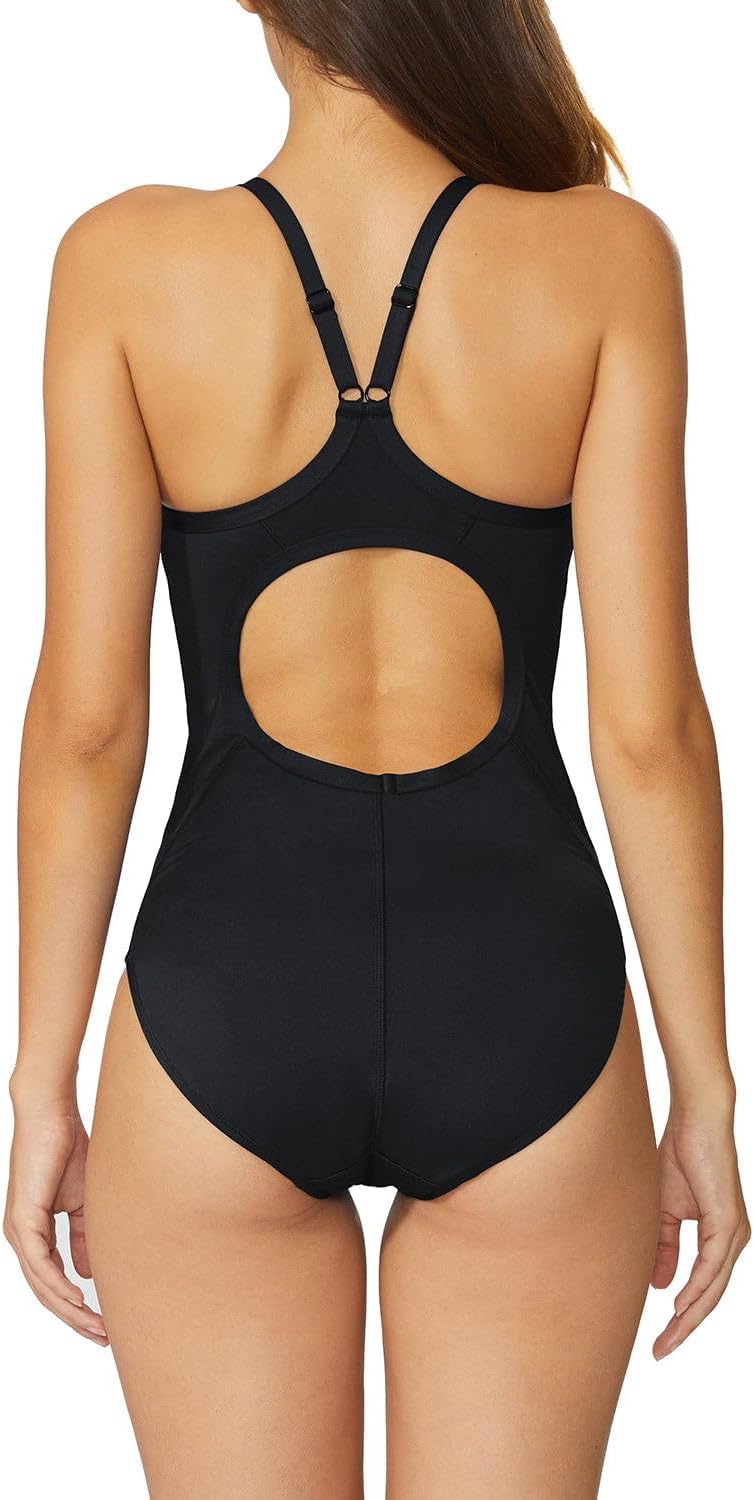
You’ve finally committed to a water aerobics class — or maybe you’ve been going for months and you’re tired of spending the last ten minutes of every session tugging your suit back into place. Water aerobics (low-impact cardio and strength exercises done in a pool, typically in waist-to-chest-deep water) puts your swimwear through a different kind of stress than lounging on a beach. You’re doing leg kicks, high knees, jumping jacks, and lateral jumps — all while buoyancy (the upward push of water on your body) works against anything that isn’t genuinely anchored to you. For full-figure and plus-size women, the stakes are higher: a suit that looks fine on the pool deck can ride up, gap at the bust, or let its chest pads fold over the moment the real movement starts. This guide organizes everything you need to know — construction details, fit tradeoffs, real owner experiences — so you can make a confident pick without opening thirty browser tabs.
Why Aqua Fitness Breaks Most Swimsuits (and What to Look For Instead)
The pool environment is not neutral territory for swimwear construction. Chlorine (the chemical used to sanitize pool water) degrades elastane — the stretchy fiber in most swimwear — faster than sun or saltwater does. At the same time, the dynamic movement of water aerobics puts lateral and vertical stress on seams that a lap-swim suit, which mostly moves in one direction, never experiences.
Here’s what that means in practical terms for a plus-size suit:
Fabric fiber content is your first filter. Nylon-dominant blends hold up better in chlorine than polyester-dominant ones. A suit labeled 80% nylon / 20% elastane (sometimes called Lycra or spandex) will typically maintain its stretch recovery longer than an 80% polyester version. The Beautyin athletic one-piece, for example, earns consistent owner notes specifically about colorfast performance, and reviewers attribute that durability partly to its nylon content — a useful data point when comparing against cheaper polyester alternatives. Per Good Housekeeping’s 2025 swimsuit roundup, chlorine resistance is one of the top construction variables separating budget suits from mid-range ones after repeated use.
By the numbers — fiber blend benchmarks worth knowing:
| Fiber Content | Chlorine Resistance | Stretch Recovery | Relative Cost |
|---|---|---|---|
| 80%+ nylon / elastane | High | Excellent | Mid–High |
| 80%+ polyester / elastane | Moderate | Good | Low–Mid |
| PBT (polybutylene terephthalate) | Very High | Moderate | Mid |
| Cotton blend | Low | Poor | Low |
Seam placement matters more during movement. A suit designed for static wear often places seams at the path of least resistance — which is exactly where friction and pull concentrate during kicks and jumps. Flatlock seaming (where both seam allowances are stitched flat to reduce bulk and chafing) is a meaningful upgrade in an athletic suit. If a listing mentions flatlock seams, that’s a real construction feature, not marketing language.
Back style affects bust support and shoulder comfort. Racerback styles (straps that converge between the shoulder blades in a Y or T shape) and U-back styles (a wider, scooped back opening) both appear frequently in plus-size athletic suits, but they behave differently on a larger bust. We’ll address that directly in the FAQ section below.
The Suits That Come Up in Real Aqua Fitness Conversations — and the Tradeoffs That Matter
Across aggregated owner reviews, a handful of suits get named specifically in water aerobics contexts — not just general swimming. That specificity matters. Here’s what the pattern of owner feedback actually tells you.
Baleaf Athletic One-Piece: Strong Torso Fit, One Infuriating Flaw
Owners consistently praise the Baleaf athletic one-piece for long-torso fit — a meaningful differentiator, since plus-size women with longer torsos routinely report that standard one-pieces ride up at the crotch because the suit simply isn’t built long enough. Reviewers also note that sizing runs true, which reduces the uncertainty of buying athletic swimwear online.
The recurring complaint, though, is specific and worth understanding: the built-in chest pad pockets are sewn shut at the outer edge. When you machine-wash the suit, the foam pads have nowhere to flatten or drain properly — they fold in on themselves and stay that way. Multiple owners report removing the pads entirely after the first few washes because re-shaping them each time isn’t practical.
The tradeoff decision here is straightforward: If you need meaningful bust support from the built-in pads, this suit may frustrate you over time. If you either don’t use the pads or plan to remove them immediately and rely on the suit’s structured lining instead, the torso fit advantage is real. Do not expect the pads to function as intended through a regular laundry rotation.
Daci Boyleg Athletic Suit: Coverage That Holds — Mostly
The Daci boyleg cut addresses one of the most common fit complaints in plus-size aqua fitness: the bra-line bulge that forms when a suit’s back band or side seam digs into soft tissue during lateral movement. Owners consistently report that this suit eliminates that issue, and that it genuinely stays put through classes — not just the first five minutes.
The one flagged exception: the boyleg hem. At least one reviewer specifically notes that the leg hem rides up when wet — not dramatically, but enough to notice during kicks. This is a physics problem as much as a construction one. Boyleg hems in lighter fabrics have less weight to anchor them, and water resistance during leg lifts creates upward drag. If boyleg coverage around the thigh is a priority for you specifically, check whether the inseam length is listed in the product specs, and compare it against what you know fits your body.
If X, then Y: If you have thick thighs and the boyleg rides up even before water is introduced, sizing up in the lower half (if the suit offers separate sizing options) will almost always solve more problems than it creates. Tighter fabric across the thigh pulls upward under load; a relaxed fit stays put.
Arolina Tankini: Aqua Zumba–Tested, With a Caveat on the Inserts
The Arolina tankini set gets named explicitly in aqua Zumba contexts — a more dynamic workout than traditional water aerobics, involving lateral shuffles, hip movements, and directional changes that test whether a two-piece stays coordinated. Owners report that the shorts portion does not ride up during class, which is the core functional promise of a tankini shorts set for active water use.
The bra insert situation, however, mirrors the Baleaf problem from a different angle. At least one owner describes the built-in inserts as too thin to be useful, and specifically notes removing them and replacing them with inserts from an old bra. This is a common workaround, but it’s worth naming as a real step you may need to take — not a defect exactly, but a gap between the suit’s implied promise and its delivered performance for anyone who needs more than minimal shaping.
Practical note: If you go this route, look for inserts with a channel cut (a small notch at the bottom edge) that allows them to follow the cup curve without folding. Flat foam inserts pulled from a bra with molded cups often work better in a tankini than the reverse.
Daci U-Back Ruched One-Piece: The Tummy-and-Behind Problem, Solved
This is the suit with the most vivid real-world performance data point in the review set. One owner — self-described as a “Zumba Water Aerobics Granny” — reports wearing it through a full 35-minute water aerobics workout and specifically calling out its coverage of a large tummy and flat behind as better than any suit she’d worn previously. That’s not a casual observation. Coverage of a flat or less-projected seat is a genuine fit challenge in plus-size swimwear because most suits are patterned with some seat curve built in; on a flatter body, that extra fabric gathers or sags. The ruching on this suit distributes that excess fabric intentionally, which is why it reads as a feature rather than a workaround.
The U-back design also distributes shoulder strap pressure across a wider band at the back, which reduces the concentrated strap dig that racerback suits can create on a fuller bust during sustained movement. Per Self.com’s 2025 roundup of swimsuits for water aerobics, U-back and wide-strap designs are specifically recommended for larger busts doing dynamic aquatic exercise, precisely because of that load distribution.
Frequently Asked Questions
Will the chest pads stay in place through repeated machine washing?
In most athletic suits at this price tier, no — not reliably. The Baleaf’s sewn-shut pockets are the most-cited example, but the underlying issue is common: foam inserts need room to expand and dry flat, and sewn-closed pockets don’t provide that. If pad retention matters to you, hand-washing the suit and air-drying the pads separately is the only consistently reliable approach. Alternatively, choose a suit with structured lining rather than removable pads.
Do boy-leg hems ride up during kicks and jumps in the water?
Yes, this can happen — and the Daci boyleg reviewers document it directly. The mechanism is drag: water resistance during a kick creates upward force on a hem that doesn’t have enough weight or grip to counteract it. Heavier fabrics with a tighter knit structure ride up less. If the hem rides up on dry land when you do a test kick, it will almost certainly ride up more in water.
Is a racerback or U-back better for large-busted women doing water aerobics?
For a larger bust doing sustained dynamic movement, the U-back generally distributes load better. A racerback converges the straps at the center back, which can create a single pressure point between the shoulder blades and reduce the horizontal span of support across the bust. A U-back maintains wider strap separation, which spreads weight more evenly. That said, racerbacks often provide more range of arm motion for overhead movements — it’s a real tradeoff, not a clear winner. Per Everyday Health’s overview of water aerobics form, arm range of motion is relevant if your class includes overhead reaches or water-resistance exercises with handheld floats.
How do I know if a suit has enough nylon content to resist chlorine?
Check the care label or product listing for fiber content. Aim for 75% nylon or higher. If the listing only says “polyester/spandex” without specifying nylon, that’s a signal the suit may fade or lose elasticity faster with regular pool use. The Beautyin suit’s colorfast owner notes correlate directly with its nylon content — a useful comparison point when reading listings that don’t volunteer the information prominently.
Should I size up if I have thick thighs even if the rest fits the size chart?
Yes, in most cases. Athletic swimsuit patterns are often graded (scaled between sizes) with a proportional assumption that doesn’t match a body with significant thigh circumference relative to waist. A suit that compresses the thigh will pull upward at the crotch and ride during movement. Sizing up resolves the thigh compression and usually only introduces minor excess fabric at the waist — which ruching, a cinched panel, or a belted design handles gracefully. The alternative — fighting a too-small leg opening for an entire class — is not a reasonable trade.
The Decision Framework
If you’re choosing between these suits right now, here’s the simplified decision tree based on what owners actually report:
- Long torso + don’t need functional chest pads → Baleaf athletic one-piece. Remove the pads on arrival. Accept that as the price of excellent torso length.
- Bra-line bulge is your main complaint → Daci boyleg, with the understanding that the hem may need monitoring during high-kick sequences.
- Aqua Zumba or lateral-movement classes → Arolina tankini, and plan to swap in your own inserts if you need more than minimal shaping.
- Tummy coverage + flat seat + sustained 30+ minute sessions → Daci U-Back Ruched One-Piece. The real-world data point here is specific and credible.
- Chlorine resistance and color retention are your top priority → prioritize any suit with 75%+ nylon content; the Beautyin suit’s owner notes make it the reference point in this category.
The common thread across all of these: the suit that stays put is the one built for movement, not just sized for your body. Construction details — fiber content, seam type, back style, pad design — determine whether a suit performs in a 35-minute class or just looks the part on the pool deck.